Speed Is Useful, but It Is Not the Standard
The strongest case for AI-assisted AI police report writing is easy to understand: officers can spend less time starting from a blank page and more time on work that requires their presence and judgment. But a faster first draft is only useful when the process around it preserves accuracy, accountability, and the officer's responsibility for the final report. The right operational question is not simply how quickly a system can produce text. It is how reliably an agency can review, correct, approve, and audit that text before it enters the official record.
The Draft Is Not the Report
An AI-generated narrative should be treated as working material, not as an independently verified statement of fact. The officer who handled the incident remains the person best positioned to determine whether the draft is complete and consistent with what the officer observed, learned, and documented. A review should check names, dates, locations, quoted statements, sequences of events, statutory elements, and any detail the source material could not establish. Information that came from observation, later investigation software, a witness, dispatch, or another system may need to be added separately and identified accurately.
The U.S. Department of Justice made the broader principle clear in its December 2024 report on artificial intelligence and criminal justice. DOJ recommended that human judgment drive the design, implementation, and use of AI systems, and that people review and verify AI outputs. It also recommended policies describing permitted and prohibited uses, evaluation methods, monitoring frequency, and known risks. For high-impact decisions, DOJ cautioned that an AI output should not be the sole basis for action. Applied to report writing, the system may assist with drafting and organization while trained personnel retain responsibility for factual and professional judgment.
Build Review Into the Workflow
A dependable review loop can have several layers. First, the officer compares the draft with the source material and corrects unsupported or inaccurate details. Second, the officer completes information that audio, video, or notes did not capture. Third, the report passes through the agency's normal supervisory and records checks. Finally, the agency samples completed reports over time to find recurring issues that an individual reviewer may not see. The exact controls should reflect the incident type, local policy, applicable law, and the consequences of an error.
A January 2025 article from the DOJ Community Oriented Policing Services Office described agencies requiring officers to review drafts, fill in missing information, edit the narrative, and attest to its accuracy. It also described Boulder Police Department's planned monthly audits comparing reports with body-camera footage, with first-line supervisors reviewing whether reports matched the underlying material. These are examples from particular implementations, not proof that one process fits every department, but they show how review can become an explicit operating step instead of an informal expectation.
Make the Source Easy to Inspect
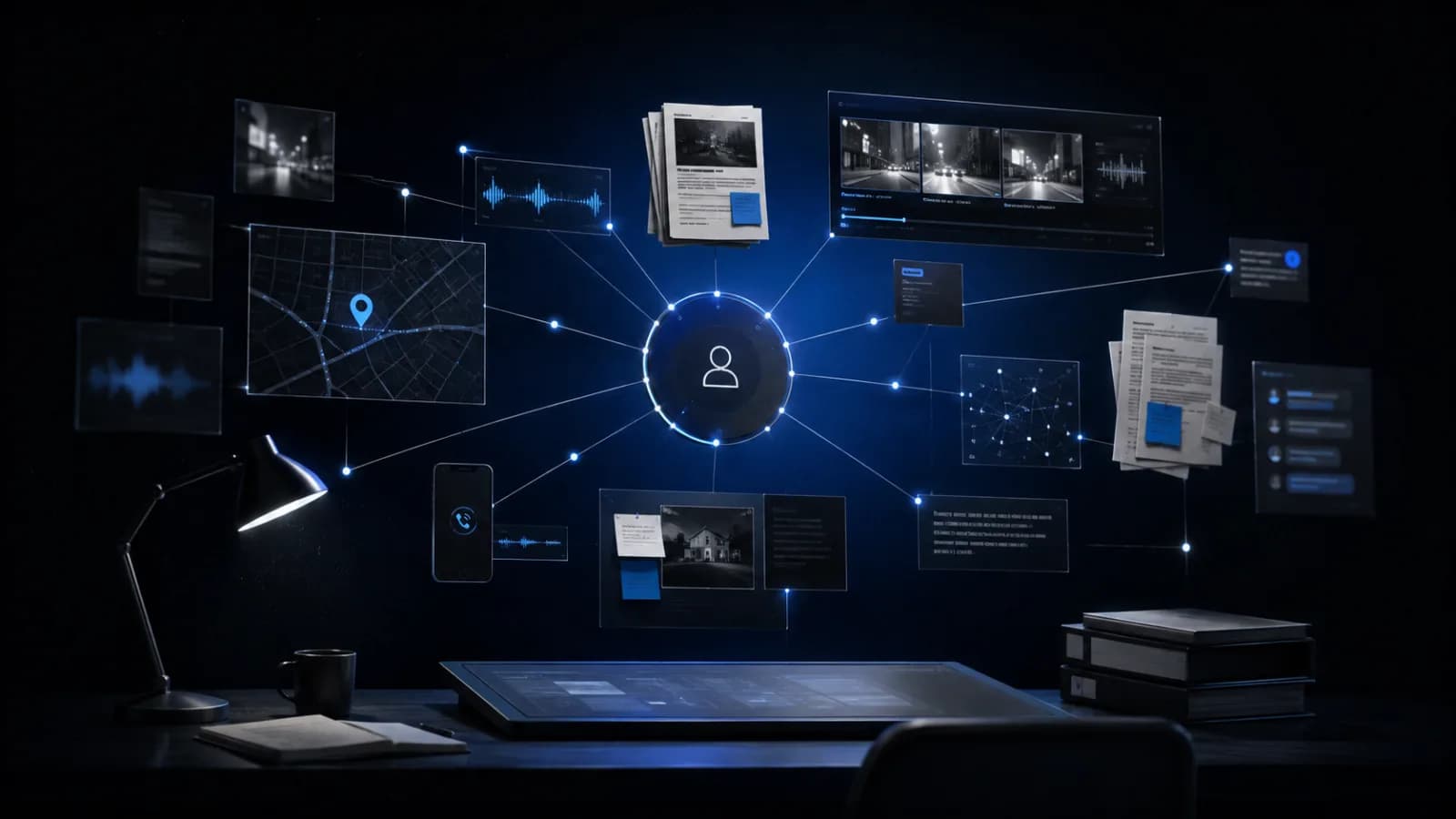
Review becomes harder when a reader has to search through a long recording to determine where a sentence came from. A better workflow helps the reviewer move between a draft and the relevant source segment, distinguish sourced information from manually added information, and see what changed before approval. Clear source references do not establish courtroom admissibility or replace formal evidence handling. They do make routine verification more practical and help a supervisor understand how the narrative was assembled.
NIST's Generative AI Profile supports this risk-management approach. It recommends evaluating capability claims with empirical methods, testing systems under conditions similar to deployment, documenting where human expertise improves performance, and reviewing sources and citations during pre-deployment testing and ongoing monitoring. NIST also discusses content provenance and version control as ways to improve transparency and traceability. For an agency, the practical lesson is to preserve enough context to reconstruct what the system produced, what a person changed, and who approved the final version.
Test the Process, Not Only the Model
A pilot should measure the full reporting workflow. Agencies can compare assisted and unassisted reports using a representative mix of incident types and track corrections by category: unsupported statements, incorrect attribution, missing details, chronology errors, transcription problems, and policy-format issues. They can also measure review time, supervisor returns, supplemental reports, and the percentage of drafts that require material changes. Time saved matters, but it should be read alongside quality and correction data.
The test set should reflect actual operating conditions, including noisy audio, overlapping speakers, incomplete narration, uncommon names, multilingual interactions, and incidents where critical facts are primarily visual rather than spoken. Results from a small set of clean recordings should not be generalized to every call type. Agencies should define which incidents are eligible during a pilot, when use is restricted, and what circumstances require a more intensive review.
Create a Feedback Path
Review findings should improve both policy and practice. Officers need a simple way to flag a draft problem. Supervisors need consistent correction categories. Program owners need a process for investigating patterns and deciding whether training, configuration, vendor escalation, or a temporary use restriction is appropriate. When the system or workflow changes, the agency should repeat relevant tests instead of assuming earlier results still apply.
A human review loop is not a ceremonial signature at the end of an automated process. It is a designed sequence of verification, correction, approval, measurement, and improvement. Agencies that make those steps visible can evaluate AI-assisted reporting on what matters most: whether it helps personnel produce timely reports without weakening the care, judgment, and accountability the official record requires.