AI in law enforcement is moving from experiment to daily workflow. Agencies are not asking whether AI can write an impressive paragraph. They are asking whether it can reduce report burden, help investigators review evidence faster, preserve source context, and fit inside policy, disclosure, and supervisor review.
That is the practical lens. Law enforcement AI should help officers and investigators handle the work already in front of them: reports, video, audio, records, jail calls, phone data, redaction, case timelines, and follow-up.
How Law Enforcement Agencies Use AI Today
The most useful police AI tools usually sit in one of a few workflows:
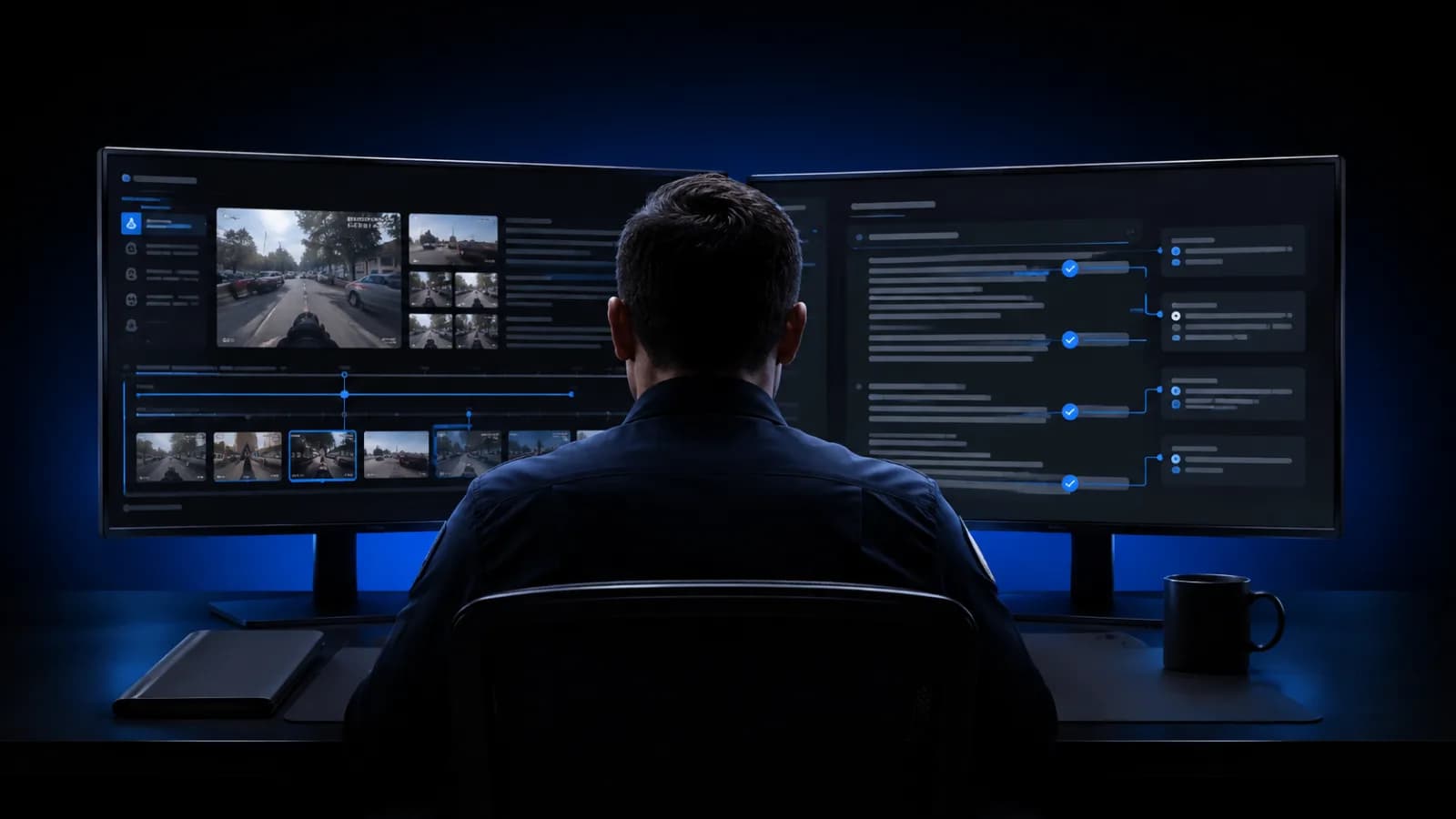
AI police AI police report writing from body-camera footage, transcripts, notes, and dispatch context
digital evidence analysis software across video, audio, documents, phone data, and case files
Jail call transcription and review for investigative leads
Redaction for public records, FOIA, discovery, and privacy workflows
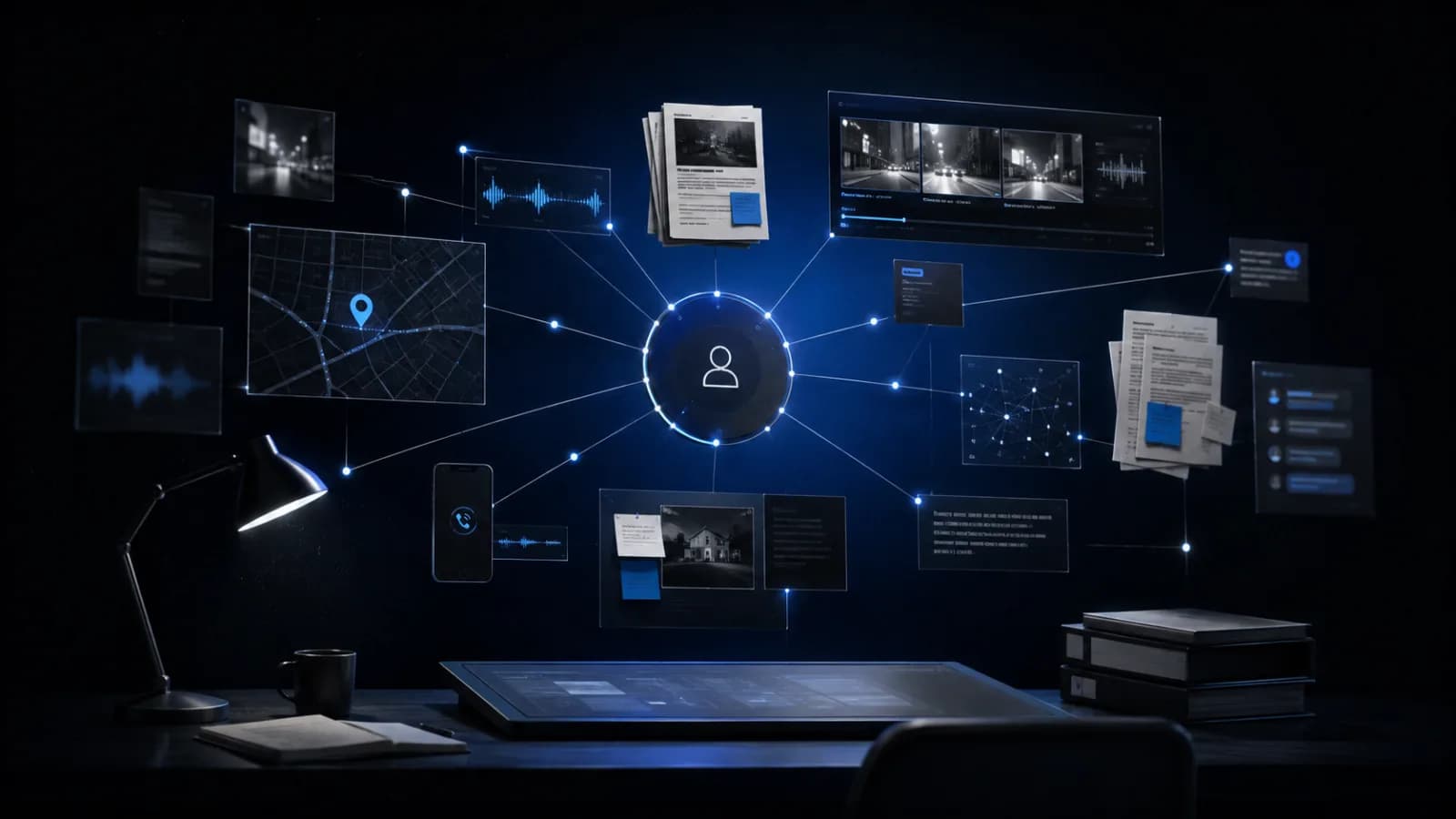
Case intelligence that connects names, vehicles, phone numbers, addresses, and events
Mobile field capture for photos, notes, translations, and supplemental context
These workflows are not separate from police work. They are police work. The question is whether software can reduce the manual burden while keeping officers and investigators responsible for final decisions.
AI for Criminal Investigations
police investigation software slow down when evidence is scattered across too many systems. A detective may need to review body-camera footage, field interviews, call logs, RMS records, jail calls, phone exports, and photos from the same case. Manual review takes time, and the most important detail may be buried in a transcript, a call, or a supplemental report.
AI investigation software for police can help by creating a searchable layer across those materials. It can transcribe audio, extract entities, build timelines, group related evidence, and surface leads for review.
The important phrase is for review. A system should not turn AI output into investigative truth. It should show where the output came from so an investigator can verify the source.
Digital Evidence Analysis and Case Intelligence
Digital evidence analysis software helps agencies move from storage to understanding. Video files, audio recordings, PDFs, photos, call records, and reports are useful only if investigators can find the relevant moments and connect them to the case.
Case intelligence means the system can help identify repeated people, places, vehicles, phone numbers, timestamps, and events. It should also keep those findings tied to the original evidence.
For Code Four INSIGHTS, that means source-linked answers. If the system creates a timeline entry or lead, the investigator should be able to open the transcript line, audio timestamp, body-camera moment, report section, or file behind it.
AI Police Report Writing
Report writing is one of the clearest places where AI can help law enforcement immediately. Officers already capture rich context through body-worn cameras, dispatch records, field notes, photos, and supplemental observations. Starting every report from a blank page wastes time and increases the chance that details get missed.
AI police report writing should create a draft that the officer reviews, edits, and approves. It should fit agency templates and local terminology. It should preserve links back to the evidence so supervisors can understand why a fact appears in the report.
The strongest AI report tools do not remove officer responsibility. They reduce repetitive transcription and formatting so officers can focus on accuracy.
Jail Calls, Audio, and Interviews
Recorded audio is one of the hardest evidence types to review manually. Jail calls, interviews, field recordings, and wiretap audio can be long, noisy, indirect, and filled with names or references that only matter when compared with other evidence.
AI can help by transcribing audio, finding names and numbers, identifying repeated phrases, and connecting call moments to the case timeline. But transcript quality and speaker uncertainty matter. Investigators need the ability to check the original audio before relying on a finding.
That is why jail call analysis AI should be part of a broader source-linked investigation workflow, not a standalone black box.
Redaction, Public Records, and Transparency
AI in law enforcement is not only about investigations. Agencies also need to respond to public records requests, discovery obligations, and privacy requirements. Video and audio redaction can consume substantial staff time when done manually.
AI-assisted redaction can help identify faces, screens, license plates, bystanders, and sensitive audio segments for review. The agency still needs policy, human approval, audit trails, and a clear record of what was changed.
Used carefully, this kind of workflow can support transparency because departments can process records faster without skipping privacy review.
Law Enforcement Intelligence Software and OSINT
Some agencies use law enforcement intelligence software for open-source intelligence, social media monitoring, dark web research, multilingual search, and threat detection. Those workflows are related to criminal investigations, but they are not the same as digital evidence analysis inside a case file.
Code Four's focus is the evidence and workflow layer around police operations: body-camera footage, reports, recorded audio, phone data, RMS and JMS context, case files, and source-linked investigation outputs. External-source findings can be part of the case, but the goal is to connect them to official evidence and human review.
That difference matters when agencies compare tools. An OSINT platform may be built for monitoring external sources. An AI investigation platform should be built for case evidence, report workflows, source links, and investigative handoff.
How Agencies Should Evaluate Law Enforcement AI
Before adopting any police AI tool, agencies should ask practical questions:
What evidence sources does it process?
Does it preserve links to original video, audio, records, and documents?
Can officers or investigators correct the AI output?
Does it separate draft output from official conclusions?
Does it connect with existing RMS, JMS, CAD, VMS, and evidence workflows?
Does it support audit trails, permissions, security, and retention requirements?
Does it help the user do the job faster without hiding uncertainty?
The right AI platform should make police work easier to review, not harder to explain.
The Code Four Approach
Code Four builds AI for law enforcement around human review and source evidence. Report helps officers turn body-camera footage, transcripts, notes, and dispatch context into review-ready reports. INSIGHTS helps investigators search digital evidence, connect case context, review jail calls and audio, build timelines, and prepare investigation-ready summaries.
The goal is straightforward: reduce repetitive review and documentation work, keep every important output verifiable, and let officers and investigators spend more time on the judgment calls only people can make.