AI investigation software for police should do more than summarize a file. The real value is helping investigators connect evidence, verify each finding, and move from scattered records to source-linked case intelligence.
That distinction matters because the search term can mean several different things. Some agencies are looking for digital evidence search. Others need jail call analysis AI, phone dump review, case timelines, or a way to connect patrol reports to detective follow-up. A useful platform should support all of those workflows without pretending that AI replaces investigative judgment.
What AI Investigation Software Should Actually Do
The best police investigation software software starts with the evidence sources investigators already use:
Body-worn camera footage and transcripts
RMS, JMS, CAD, and case records
Jail calls, interviews, field audio, and recorded statements
Phone dumps, call detail records, contact lists, and location data
Photos, attachments, PDFs, tips, and external-source findings
Patrol reports, supplemental narratives, and officer notes
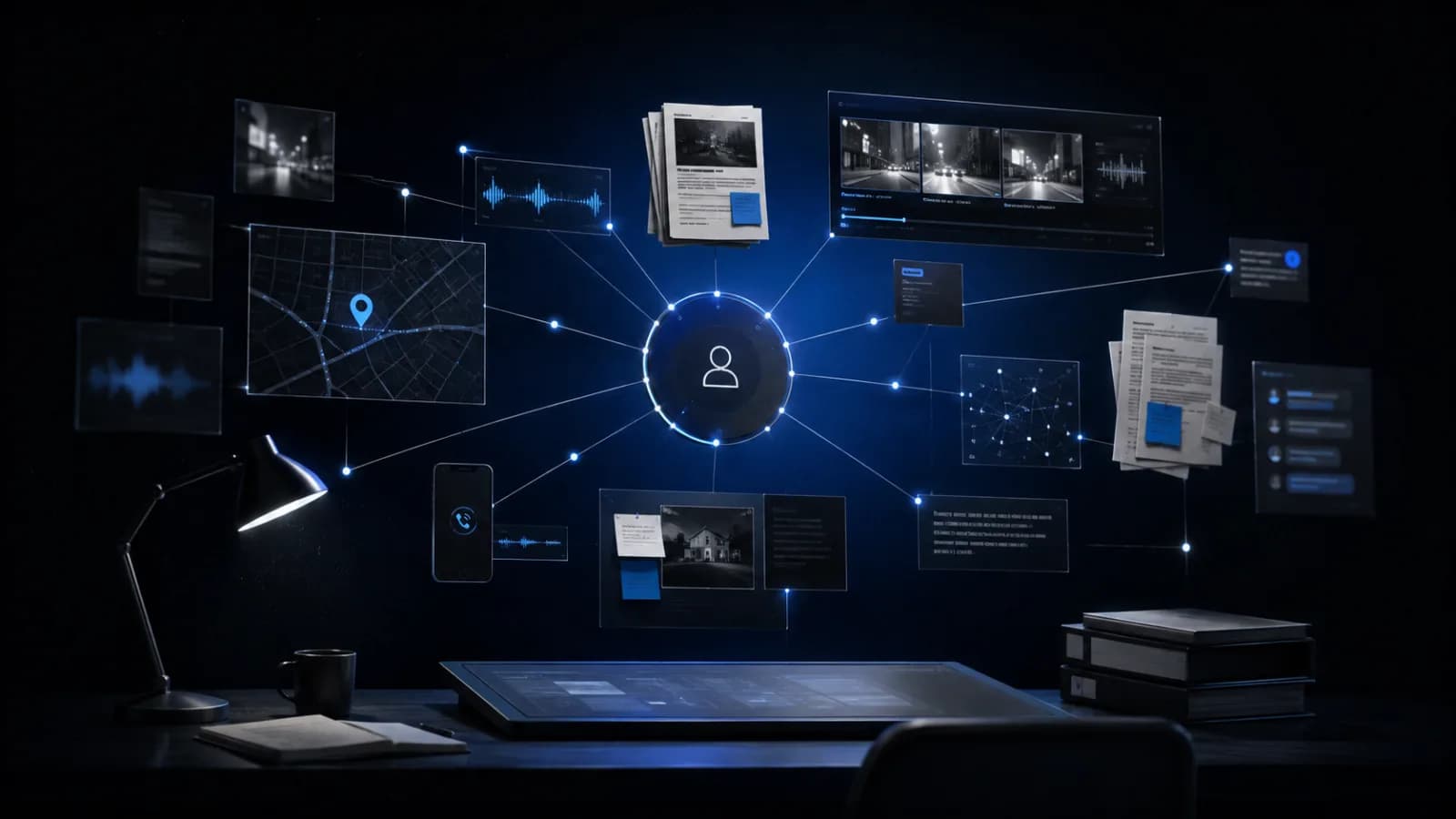
The software should turn those sources into a searchable investigative workspace. Investigators should be able to ask what happened, who appeared across multiple sources, which phone numbers or addresses repeat, and where a statement appears in the original evidence.
Source Links Matter More Than Summaries
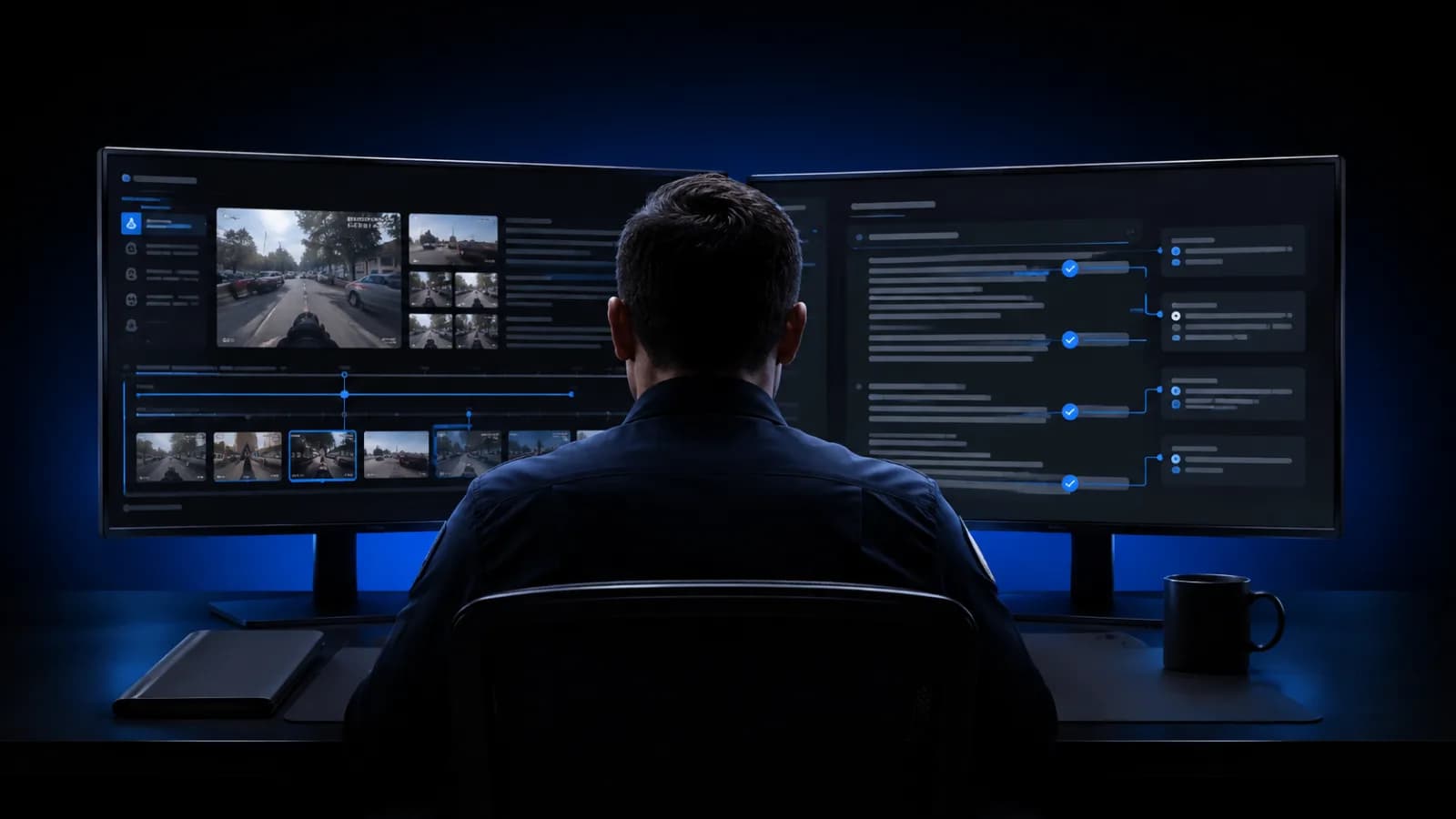
Summaries are useful, but summaries alone are not enough for criminal investigations. Investigators need to know where every claim came from. If AI says a suspect mentioned a vehicle, the detective should be able to jump to the exact transcript line, audio timestamp, report paragraph, or video moment that supports it.
That is why source-linked review is central to Code Four INSIGHTS. The goal is not to create a black box. The goal is to reduce manual search while keeping the human investigator in control of every important decision.
What Makes Police Investigation AI Different
Generic AI tools are not designed around chain of custody, disclosure, auditability, agency templates, or law enforcement system integrations. Police investigations require software that understands the workflow around evidence review, case handoff, supervisor review, warrants, reports, and retention.
An AI tool for police investigations should be evaluated on practical questions:
Can it handle body camera footage, audio, call logs, phone data, and case files together?
Does it preserve links to the original source evidence?
Can investigators verify answers before acting on them?
Does it connect with existing RMS, JMS, CAD, VMS, or evidence workflows?
Does it create useful timelines, lead lists, case summaries, and briefing packets?
Does it avoid claiming certainty when the evidence is incomplete?
If the answer is no, the tool may be interesting, but it is not ready to sit inside investigative work.
Where AI Helps Most
AI helps when the volume of evidence is too large for manual review. That includes long jail calls, hours of body-camera footage, overlapping reports, phone records, interview audio, and cases where the same person, vehicle, address, or phone number appears across different systems.
In those workflows, AI can find patterns faster than a manual search. It can draft a first-pass timeline. It can group related names and numbers. It can flag moments for review. It can help investigators prepare summaries or handoff packets without starting from a blank page.
The investigator still decides what matters. AI reduces the search burden so detectives can spend more time on judgment, interviews, follow-up, and case strategy.
How This Connects to Report Writing
Police investigations often begin with patrol. The first report, body-camera footage, CAD context, and officer notes become the foundation for follow-up. When report writing and investigation software are disconnected, important context can get lost.
That is why AI police report writing and investigation software should work together. Code Four Report helps create source-linked patrol narratives. Code Four INSIGHTS helps investigators use that context alongside evidence, calls, phone data, and case files.
The Bottom Line
Agencies searching for AI investigation software for police should look for tools that are built around real investigative workflows, not generic chat. The right platform should process digital evidence, connect records, surface leads, build timelines, and keep every output tied to source evidence.
That is the direction modern police investigation software is moving: faster search, stronger verification, cleaner handoff, and human investigators making the final call.