What I found when we looked closer
Heber City Police Department is not a simple small-town reporting environment. The department’s own background page lists 52 staff members, including four detective AI tools and eight patrol officers, and its published duties range from accidents and burglaries to drugs and alcohol investigations, sex crimes, and thefts. Recent city press releases also show Heber officers participating in Wasatch Back Major Crimes operations and other multi-agency enforcement activity.
That is what makes documentation quality matter here. Patrol reports need to be usable immediately, but some of those same incidents can turn into detective work or regional follow-up with very little delay.
Following one report through the building
The first thing we do with a new department is trace where a report goes after the officer hits submit. Here, it passes through 4 hands:
- 1Patrol officer
- 2Supervisor
- 3Four detectives
- 4Wasatch Back Major Crimes
Every one of those readers needs the same facts from the first draft. That is what shaped what we built.
What we built for them
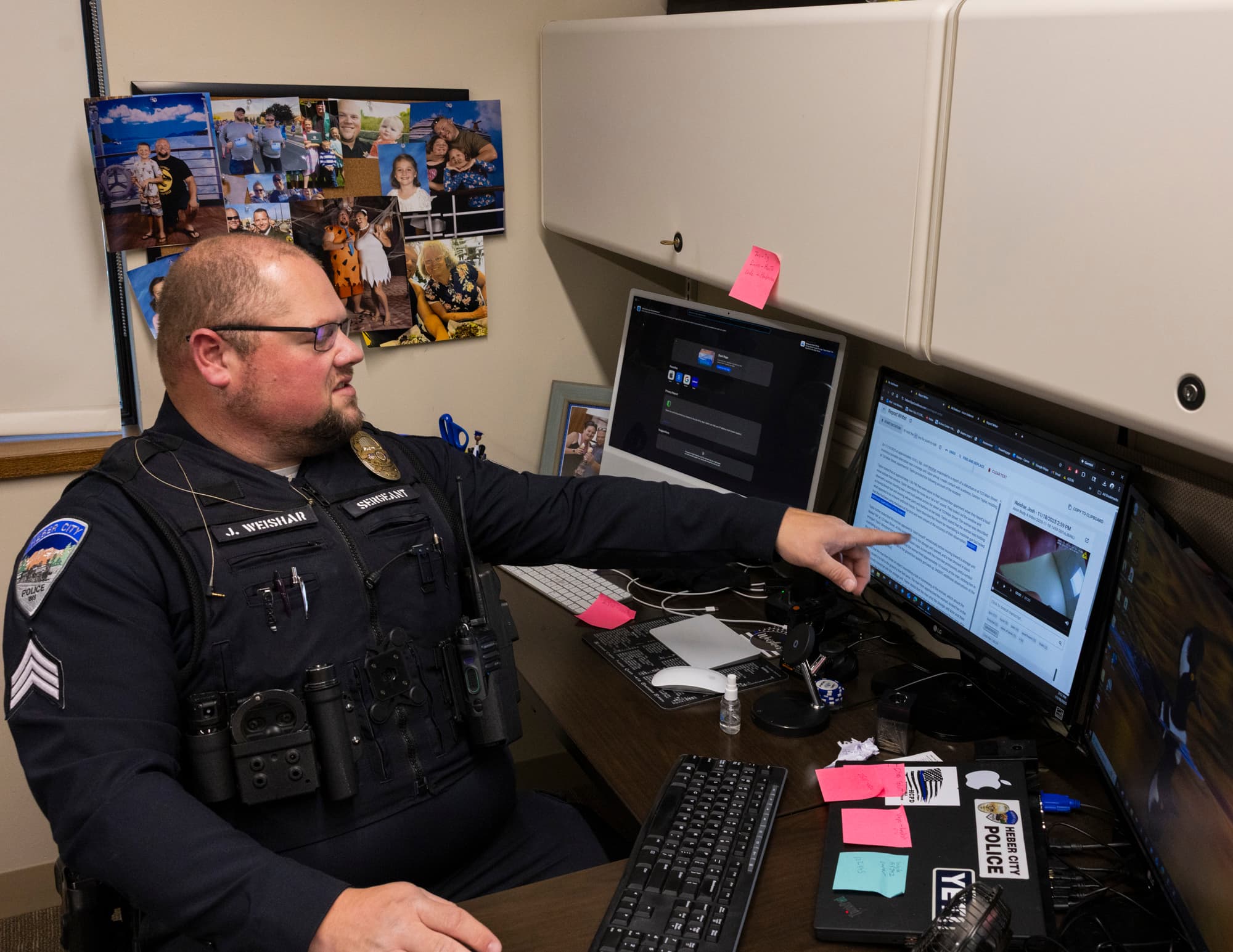
With eight patrol officers, every hour spent retyping a narrative is a visible gap on the schedule. Report drafts from the footage so the officer edits instead of starting from blank.
When a burglary or drug case joins a multi-agency operation, Insights gives detectives one searchable record of the footage and statements to hand over.
What we're watching
These are the signals that will tell us whether it's working here:
- Patrol hours spent on report writing per week
- Detective supplements that start from the patrol draft
- Time to package a case for a regional operation
Figures on this page come from the department's own published materials. We only publish Code Four results after the department reviews them.